
AI works in demos because the data is curated, labeled, and clean.
It fails in production because operational data isn’t.
Requests are vague. Context is missing. Knowledge is scattered.

AI doesn’t break because models are weak.
It breaks because intake is broken.
Operational work arrives as noise:
• incomplete requests
• wrong categories
• missing context
• screenshots instead of data
• knowledge spread across systems
Humans compensate automatically.
Systems don’t.
So automation stalls before it starts.
The Problem: 80% of Knowledge Never Makes It Into Systems
Decisions, fixes, and expertise live in:
• Jira tickets
• Confluence pages
• Slack & Teams threads
• emails
• CRM notes
• logs and attachments
This is the undocumented majority, the part traditional knowledge management never captures.
Your AI can’t learn from what it cannot see.

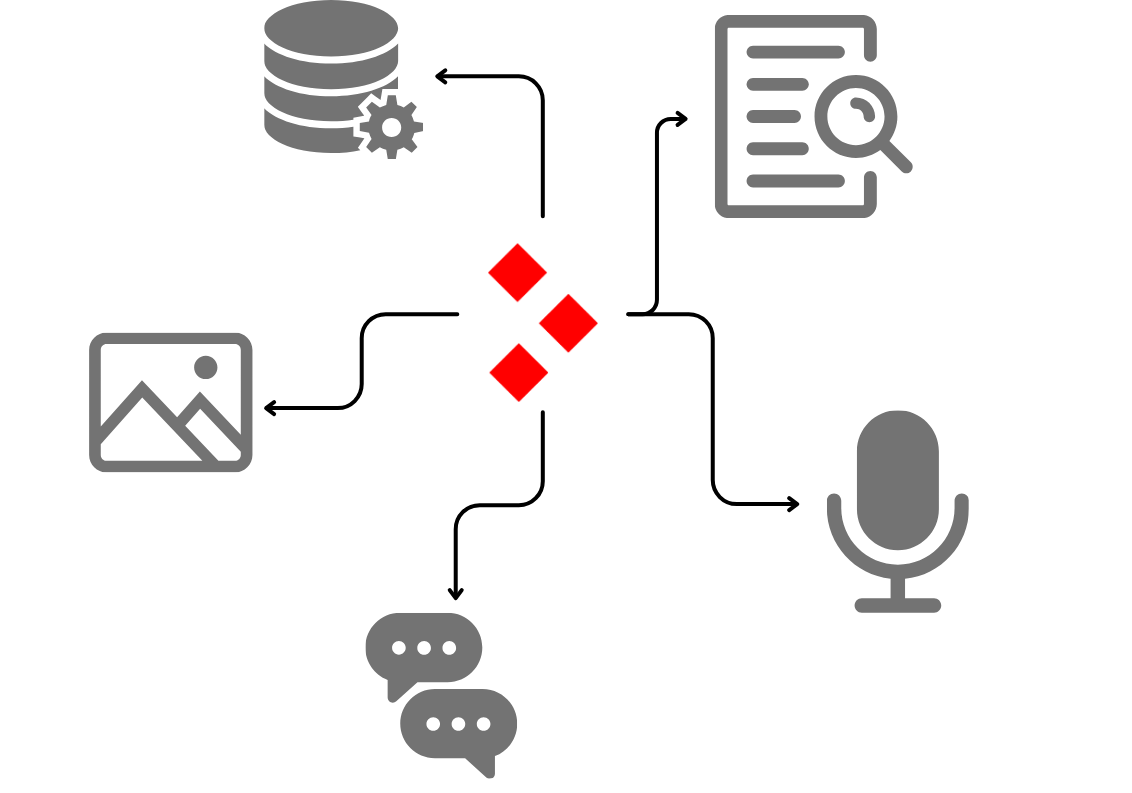
IntakeOps prepares reality for automation.
Instead of replacing systems, IntakeOps connects them and builds usable context.
Before any automation runs, the engine:
The result: a self-learning intelligence layer that actually mirrors how your teams work, not how SOPs think they should.
Why Jira and Confluence First
Because that’s where real operational knowledge accumulates.
Every ticket, comment, and edit captures reasoning, not just facts.
Starting here:
Most knowledge projects try to centralize everything first.
We start where the signal already exists.
Beyond Jira: The Expansion Path
Once the intake layer proves value, it extends across domains:

Each step builds on validated context, not assumptions.
How It Works




Built on an API-first, agentic architecture for deterministic orchestration and traceable outcomes.
What Makes This Different
Not a chatbot
Not search
Not another knowledge base
Other tools optimize work inside a single system.
IntakeOps creates a shared intelligence layer across your entire stack.
We solve the upstream problem:
capturing and structuring the knowledge that never gets documented.
The Result: A Living Intelligence Layer
Not a static wiki. Not a fragile LLM integration. But a continuously learning intelligence intake layer — resilient, explainable, and enterprise-ready.
Traditional Knowledge Management vs. Arti’s IntakeOps Engine
Traditional Approach:
- ✗ 12-month implementation projects
- ✗ Outdated before launch
- ✗ Nobody uses it
- ✗ Isolated from daily workflows
IntakeOps:
- ✓ Value in weeks, not months
- ✓ Improves continuously through real usage
- ✓ Built where teams already work
- ✓ Scales with your operations

Proven in Production

From Chaos To Clarity
Phase 1: Discovery – Map hidden operational friction
Phase 2: Structuring – Build the intelligence layer
Phase 3: Automation – Enable reliable decision systems
Find out where your operations are losing time and capacity.
Find out where your operations are losing time and capacity.
The Friction Audit is a 2-week diagnostic that surfaces:
✔ Bottlenecks and hidden work
✔ Expert dependency risks
✔ Repetitive issues suitable for automation
✔ Quantified impact