
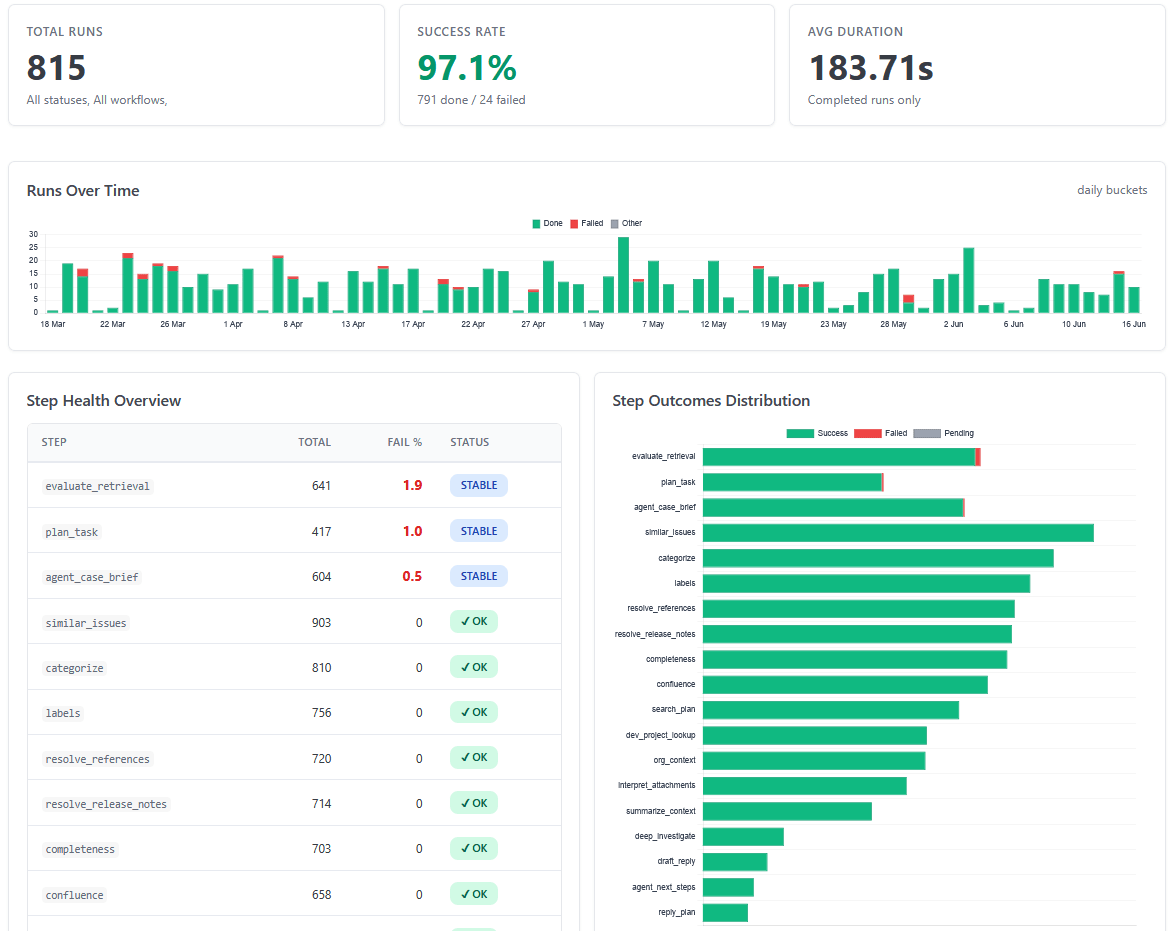
It runs inside the tools your team already uses: Jira, Slack, Teams, Confluence. No new interface. No behavior change required.
Intake & context reconstruction
When a request arrives, arti reads it, classifies what kind of work it is, and reconstructs the relevant context before a human has to. It searches past tickets, documentation, project history, and customer-specific knowledge, pulling together what’s needed to act, in the time it takes to open the ticket.
The team starts from context, not from zero.
Decision-ready briefs
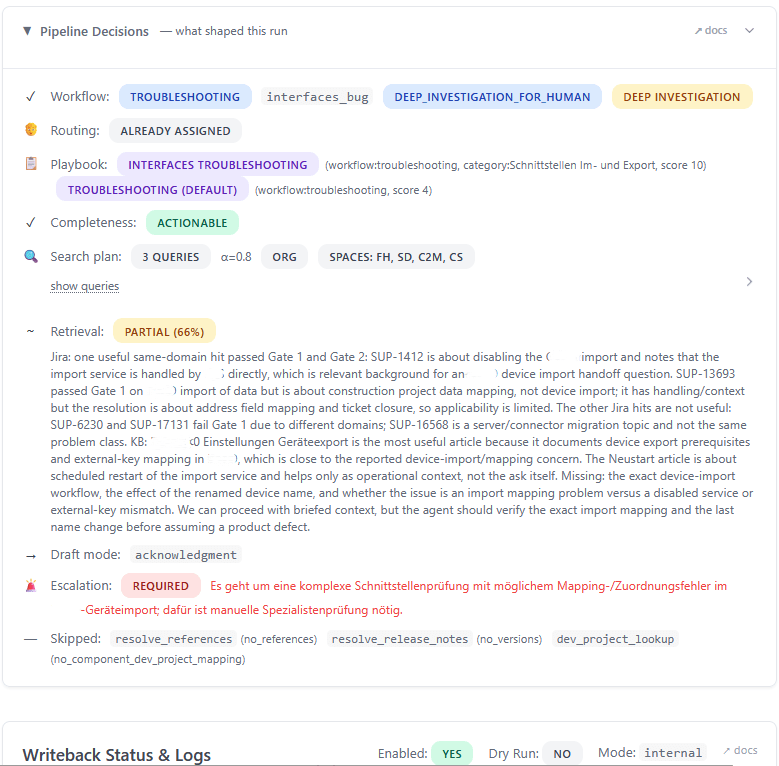
For every incoming case, arti prepares a structured brief: what the request likely is, what context matters, what information is missing, which similar cases apply, what was done before, and which next step is suggested. The reasoning is visible — every routing decision, every retrieval, every suggestion comes with the evidence behind it.
The team stops asking “who has seen this before?” and starts acting on a prepared picture.
Operational assistant
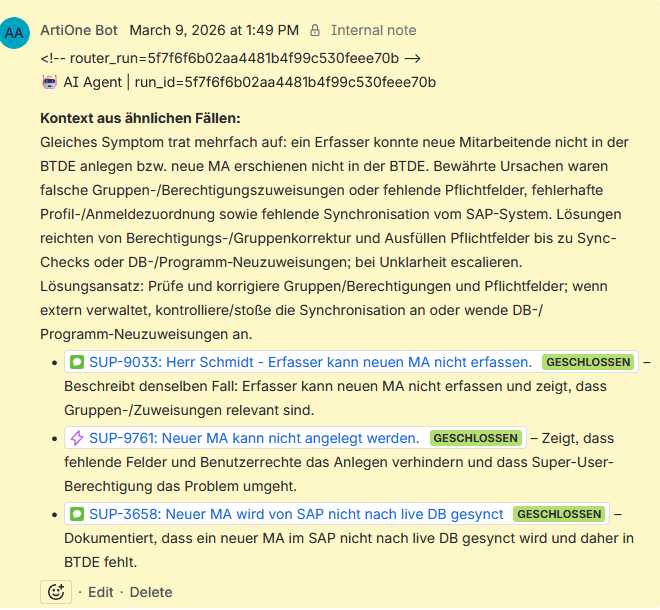
Arti is accessible directly in Slack and Teams, where service work already happens. The team can ask arti why something was routed, classified, or owned the way it was — and arti surfaces the evidence behind every suggestion. Arti also works in the other direction: it flags inactive or overdue work, detects tickets closed without a real resolution, and requests clarification from the right expert when learning is unclear.
Decisions, corrections, and tacit knowledge that would otherwise disappear in chat threads become part of the system.
Learning from outcomes
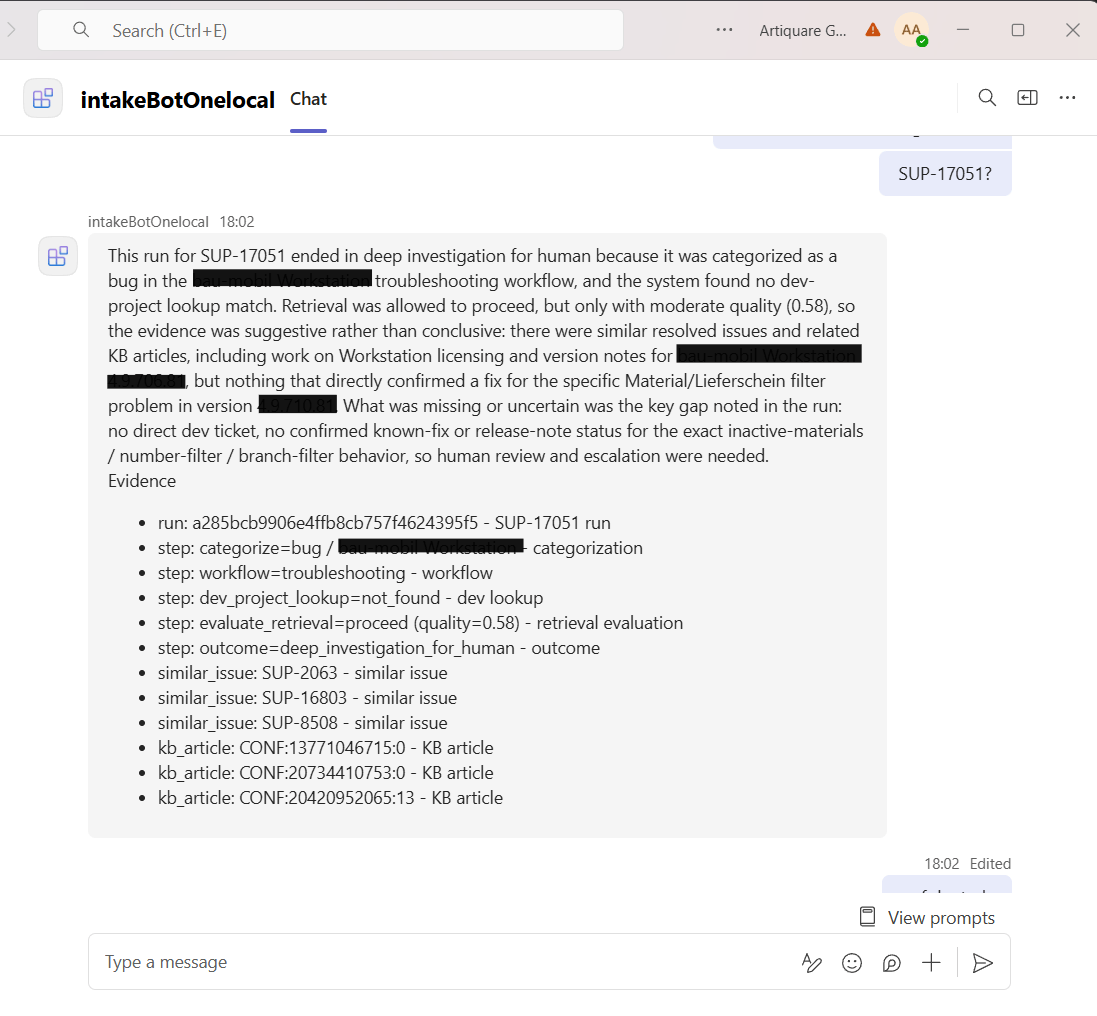
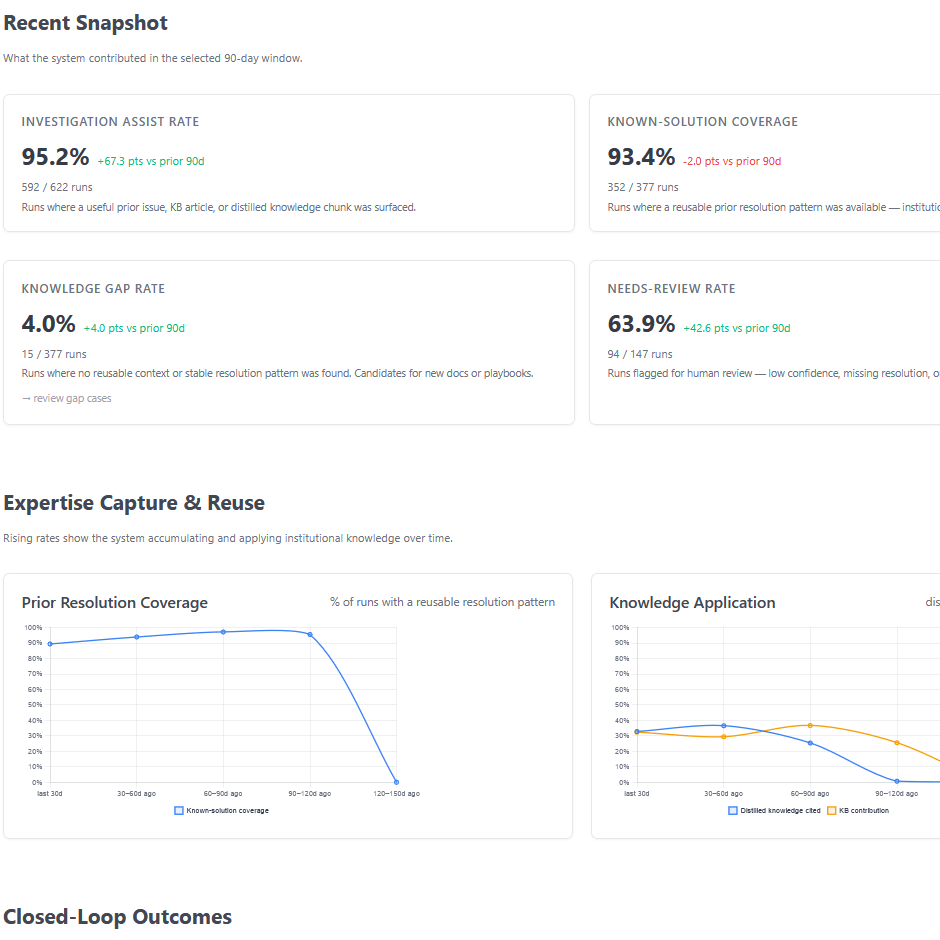
Arti learns from how work is actually handled. Every correction, every routing change, every resolution that differs from arti’s suggestion becomes a signal. The system compares what it suggested with what actually worked, extracts the difference, and updates the next recommendation. Expert corrections don’t disappear — they become reusable.
Most AI tools learn from feedback that has to be written down. Arti learns from what the team does.
Surfacing what should change upstream
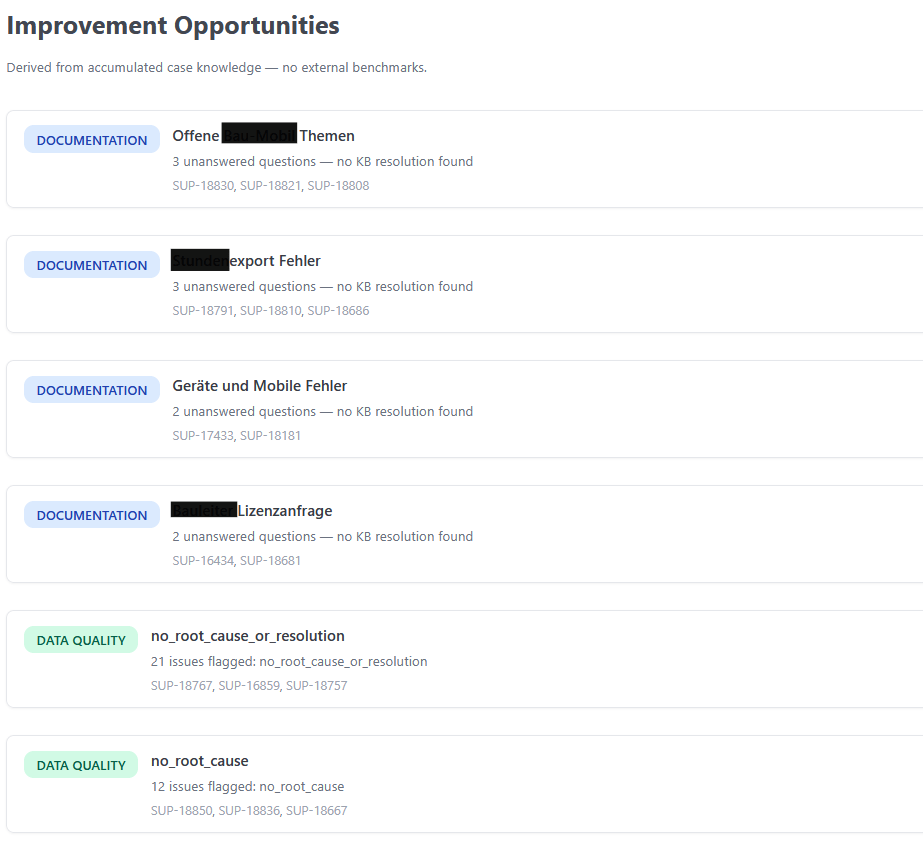
Once arti sees enough requests, corrections, and outcomes, it identifies what should be fixed upstream: repeated customer issues, documentation gaps, recurring product or supplier problems, process inefficiencies, missing training material. The goal is not to handle the same issue faster forever — it’s to surface why the same issue keeps coming back.
Teams move from processing repeated work to reducing the causes of repeated work.
Your data, your knowledge base
Every correction, resolution, and routing decision that runs through arti accumulates in your operational memory — not ours. We don’t train our models on your data. The playbooks, the classifications, the captured expertise belong to your company. arti is the system that helps you build it; you own what comes out of it.

Start with one workflow
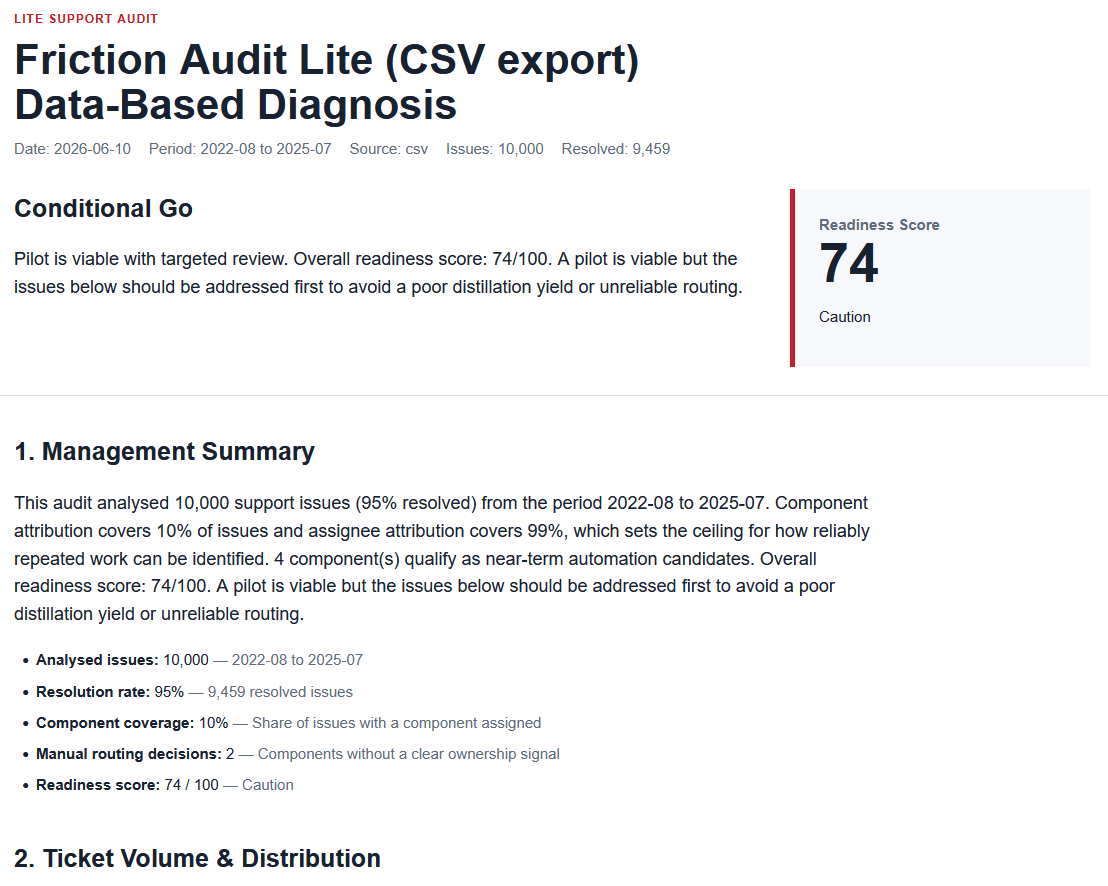
Most teams start with a Friction Audit, a focused two-week diagnostic on one Jira workflow. It identifies where useful signal already exists, what structure is missing, which recurring issues are reusable, and which first production slice is realistic.
Real Integration Outcomes
Arti connected to three years of Jira history and uncovered workflow patterns our process team missed. German approval requests now auto-route correctly instead of taking four times longer than US requests.
Integration took 2 weeks, not 6 months. The system learned from our existing ticket patterns and now handles 40% of triage automatically while feeding better context to our experts.
See how decisions are built in practice
Book a Friction Audit – we’ll show you exactly what patterns are hidden in your existing systems—and how Arti surfaces them without disrupting your operations.
Request a demo or technical walkthrough →